2012-01-22 Winter Instrument Flight

Flew home from Punta Gorda, FL yesterday after three wonderful days (or parts thereof) in 80+ degree weather. Absolutely beautiful. Found a really wonderful location with a 70′s house that needs new bathrooms; a new kitchen; and some upkeep. Bev and I know now that we can find one, so we’ll reflect on what the next step might be. One thing that is abundantly clear – with this airplane I can go anywhere in a reasonable time, so at least short vacations are feasible in the near term.

Trip home yesterday included some interesting flight planning. Tornado warnings the night before on the panhandle and west, and thunderstorm warnings across our route home yesterday. I planned an early departure to have us north of the threat area by 9am or maybe 10am, and into Georgia heading north.

I dropped the ball on my first morning briefing, thinking that since home was forecast to be in the high 40′s, ice would not be an issue. I didn’t check airmets or temps before heading to breakfast, but noted that our planned KISO destination was low IFR at the moment, and forecast not to improve above 600′ all day. KEDE was similar, but I ruled that one out in favor of KISO [better chance of getting clearance on the ground, and the big runway with an ILS didn't hurt either]. I also figured going inland would give me higher ceilings or better visibility, but that was just a guess.

While Charles and I were having breakfast, I thought I’d better check airmets and temps for icing potential, and went up to the room to get my iPAD. Turns out the airmet covered our northern half of the flight – zulu for ice. The area forecast told me tops would be around 7000′ up north, and we planned 7k/9k for the route. Zulu was to end before our north arrival, but I’d have to watch.

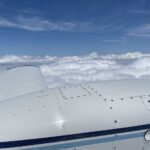
It was VFR here, and the go/no-go decision was clearly a GO. Clearance was easy out of Punta Gorda. We flew north over Disney World, and accepted a few deviations from Miami Center before taking a straight shot for Craig and the rain storm / afternoon potential thunderstorm area (I saw this as a low risk for most of the day in this area near the coast). We flew in VFR conditions right over a 9000′ ceiling that started at the Florida border. That ceiling never ended all the way home.

Every hour I checked weather at our first destination – Kinston (KISO). 400 ovc with the vis slowly improving to 2sm. I spoke to Charlie about the need for a rest stop. He said he was up for whatever we needed to do, but I was concerned that in an hour – pain would be involved. It was a concern for me as well, but ultimately I decided to accept the extra risk for him and I, and do the rest stop at KISO as planned. The risk part is an ILS to minimums and and IFR departure in the same conditions. I was a good choice. Conditions at home called for more gas (options), and a rest turned out to be a good idea. Note to self – don’t keep pushing.

We accepted the ILS, and this would be the first chance to fly a coupled approach with the new Glideslope coupler. ILS 5 was on our route of flight, so a slight vector intercept angle was given and we descended into IMC on the autopilot. WIRE was run and the altimeter set twice on the inbound. It was changing rapidly. The first indication that something was a little different was watching the OAT. Temps at 9000′ were +10 degr C. Upon reaching 3000′ they were down to 5 degrees C, and as I recall, still lower on the ground.

The coupler worked as advertised, though either its limitations or my power management has the capture running us to 1000fpm descent initially and one dot low on the glideslope. It recovers quickly to precision, and it is repeatable. I’ll adapt my technique to accommodate by intercepting higher, I think.

[KISO ILS 5] Down the chute we go. Told approach that I’d try once; execute the missed; and then request my alternate (ORF). I was tracking along nicely to about 600′ when the wind shifted from a significant right crosswind to a strong left cross wind. My scan got hung up for a few microseconds that felt like ten minutes -looking at the CDI to ensure I was on the localizer. I felt I had the leans for a moment; got my scan re-energized; broke out at 400′ with my finger on the autopilot master switch; disengaged; full flaps; props full up; check gear down; land; off a the first exit. This is as close to a carrier landing as I’ll ever get, though much smoother touchdown, thank you very much.

After topping the mains and auxs (not the nacelles), we departed with the ceilings still 400′ and vis at 2sm. Broke out at 4300′ and the ride home was fast and smooth. Flew IFR above the rising ceilings all the way home; checking on conditions for the next landings. ICE was a concern, but Dover had no pireps of any, and the ZULU I received earlier had expired. The temperature inversion was significant in North Carolina, and I’m sure would be deeper here.

Just north of SBY, I requested GPS27 from Sophy (IF) to manage the expected northly winds of about 9 knots. That was granted and I was given a descent to 3000′. I then asked for pilots discretion to 3000′ on the theory that ice could be down there, and there was no reason to go look for it. Heading for sophy at 7000′ now and still in the clear, I looked around for wind information. Thats when I realized that most airports other than Dover favored (by far) an easterly approach, so I changed my request to GPS 9 from ZIZZO. They cleared me to that, pilots discretion to 2000′ now.

[33N GPS 9] This approach went more smoothly. Descending toward the clouds below, I turned up the defrost; pitot heat on; and refreshed my memory as to where the alternate air doors were. I gave Charlie the job for watching the windshield and wings for signs of icing, and also watching for the runway out the windsheild (he was surprised! by it suddenly appearing on the last approach). We did the procedure turn and let Dover know we’d cancel with them on the ground. Breaking out above 1000′ and I was ready for the wind shift and had plenty of time. I plan to develop a simulator scenario around the shifting winds for continued practice when you have low ceilings and visibility. This time I did an extra GUMPS with the additonal time, and minimized the flaps to account for the potential of runway ice. The landing was uneventful.

Squawks include: Vacuum AI slow to spin up and align. Once locked in and warm – no problem. Watch this. #2 NAV Head doesn’t work for VORs. ILS tracked nicely, and the ASPEN could display the signal for VORs and ILS from the radio. Head needs work – talk with Penn Avionics.

Posted in Equipment, ICE Encounters, Instrument Techniques, Interesting Flights, Maintenance | Leave a comment

Punta Gorda Fur Ball

Arriving at Punta Gorda, I asked a few times for the GPS22 approach. They weren’t responding to me as I got closer to the approach IAF, until I sailed passed it.

I’m 13 nm from the airport at this time, and Fort Myers approach tells me I would be third for the same approach. I declined and cancelled IFR, opting for the visual. They wanted me to stay with them for flight following, but that made no sense. I needed to get on the CTAF and make this happen on my own.

Changing frequencies, the picture – the ugly picture – becomes more clear. Three people on two different approaches; traffic using RW15; five airplanes doing touch and goes; two leaving; and then there is me.

I would not be doing touch and goes with all this activity. But that is just me. Several light sports were buzzing away.

Slow it down. I decide to use an entry method I read about at AOPA, and it worked like a charm. They recommend coming in 1,000′ above the pattern altitude over the airport, see whats going on, and maneuver into the pattern with minimal disruption.

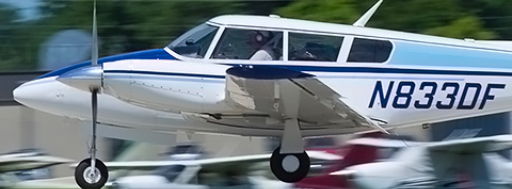
The Twin Comanche is a traveling machine, but doesn’t have the visibility you would enjoy in more modern machines. At least in my observation. The view in turns can be limited, and with the engines hanging out there, you have to compensate for what you cannot see. Oh – and we are going a bunch faster too.

I decided to come in 2,000′ higher due to the number of targets. I had some trouble finding many of them. What I managed to do is get my eyeballs on the last C172 coming off the runway, and called him. He had the others in sight, so I descended to fall in trail (wider pattern) and entered that way on the downwind to RW15. Thankfully I have mastered slowing this bird down.

On downwind, a large jet (707?) took RW4 for departure. No affect on me, but good luck not sucking up a few light sports on departure there fella.

So now I am number three for landing and scanning hard for traffic. I lose the C172 as he calls turning base, so I announce an extended downwind to the river. I picked him up again, and kept scanning for the approach traffic. Arrow does a touch and go while C172 is on short final and I’m on base slowing to 105mph.

Light sport enters downwind behind me; I turn final and watch the C172 touch and go. I’m off at the first turn off.

At first I was thinking I wasn’t going to like this place much with all this buzz, but thats just because I’m so used to quiet up north in winter. Activity is a good thing. I have to admit – its not just about me all the time.

Fly safe…

Posted in Home Page | 1 Comment

Simplified Filing

Nothing new for many, but watching what others were doing led me to take a different approach to filing with a fast airplane.

Charles and I took a day off and used the Twin Comanche to fly to Punta Gorda yesterday. We logged 6.8 hours of flying, including one stop at KRBW – Low Country Airport in South Carolina.

First leg routing was 33N-SBY-ORF=CHS-KRBW. This is a more simplified routing than I usually file, but I experimented based on recent routings filed in FltPlan.com. The north leg file in this manner actually worked as planned. Surprise.

Landing at Low Country, I met a very nice pilot in an RV-6 who flies for a living (SabreLiners). He was telling me he flew checks in a PA-30 (like mine) with very limited equipment. We had a nice talk and then Charles and I had lunch.

Next leg was also filed in a simplified manner. KRBW-SAV-CRG-KPGD (Punta Gorda). They gave me that, but I knew it wouldn’t last. General Aviation is alive and well in Florida, and we were given at least three re-routes. No big deal though, it just added some time to the flight.

6.8 hours total over the two flights. Longer by over an hour than I anticipated – mostly due to wind – but the flight was a good one.

Posted in Instrument Techniques, Interesting Flights | Leave a comment

50 Hr Maintenance

In preparation for a Florida trip later this week, N833DF is in for oil change and recurring AD compliance inspections.

Only unexpected squawk is that the rotating beacon / belly strobe breaker has tripped. It is possible that this can interfere with my plans, but probably not.

The interior work complicates the diagnostics. I reviewed pictures and found the breaker tripped when I picked it up, but my pre-flight got lazy on the beacon and breakers. I was seeing what I expected to see.

I will handle the leaky air vent on my own after the airplane comes back.

Posted in Maintenance, N833DF | 1 Comment

Success! New Glideslope Light

Ordered a new blue replacement indicator light to replace the green one that came with the new glideslope computer. The later was identical to my single gear down and locked indicator, which is mounted almost out of sight. You can see my concern.

I paid $35. For this little thing, and when I installed it prior to yesterday’s Angel Flight, it didn’t work. When I woke up this morning, I realized that the BULB wasn’t included!! Made the switch again – to a blue lense – and it worked.

Then I found out my mechanic has a bagful of extra ones laying around. Oh well. The learning continues.

Posted in Equipment, N833DF | Leave a comment

Angel Flight – Saturday, Jan 14th, 2012

Mission: Move a female passenger from Boston to Wings Field down to Greensboro, NC to somewhere in South Georgia. There were three legs to this mission, and mine was the middle leg. An instructor from Delaware Airpark, Jason, came along for what turned out to be a seven hour ride in strong westerly winds (typically 75 mph). The flight legs went very smoothly, though the winds held us all back a bit.

My passenger reported being cold in my newly appointed back seats, but my monster heater didn’t seem to be a remedy. Turns out there is a considerable air leak on one of the fresh air nozzles – kind of like an industrial air conditioner on this flight. That issue could have developed during the interior work, or it could have been that way for awhile. I reviewed the ventilation schematics and it looks like the remedy is right there at the nozzle itself. As for the heat, I’ll also have to ensure there is no ‘new carpet’ blockage of the rearward heater vents and that they are open. I haven’t had to consider heat for awhile, but flying in -11 degrees C air at 8,000′ reminds you.

The fuel plan worked out great, or at least as planned. We flew the Twin Comanche for a total of 7.0 hours yesterday without refueling. The airplane burned 13.8 gallons per hour total – 6.9 GPH per side. Not too bad for 166kt cruising speed. The last leg of the day was Delaware Airpark to 33N, after I dropped Jason off. I had dipped the tanks out at GSO, and the burns were less than planned, so I knew I had adequate reserves.

Getting to the point on fuel, I landed at GED at night with 5.0 gallons in each main tank, and 3 gallons in the aux tanks. That is an hour total if you run the aux tanks dry (at night after flying all day and being low), and 40 minutes until the mains go dry if you avoid using the aux tanks. Plenty of fuel – but what I should have done was to take on 8 gallons of fuel per side in the mains while at Delaware Airpark. No reason not too. I’ll avoid this going forward by loading 8 gal per side in the mains whenever the next leg will leave me with less than that upon arrival at my destination. I avoided the cold and made the last quick leg a higher risk than necessary.

I left the airplane in GED for an oil change and to comply with several required periodic AD inspections. I also have a tripped breaker on the rotating beacon/belly strobe I just noticed, and a desire to change the light color on the new glideslope coupler. Hopefully the guys down here can get to all this for my trip to Florida on Friday.

Posted in Angel Flights | Leave a comment